Showing posts with label photovoltaics. Show all posts

Friday, March 31, 2017

Raisin' in the Sun: Wine Grapes and Solar Power

Vigneron Gary Cox set a long-term goal of environmental sustainability for his Cox Canyon Vineyards and Ellensburg Canyon Winery in 1999, becoming the first sustainable vineyard and winery in Kittitas County, Washington USA. Recently, Cox invested in renewable energy by installing solar panels on his property to provide energy for processing his cabernet franc, riesling and malbec wine grapes. Cox's solar array comprises 85 solar panels on a portion of his 17-acre vineyard that wouldn't accommodate vines anyway. Read to full article here: Yakima Magazine Article MARCH 2017 


Thursday, August 25, 2016

DAR Historic Building in Washington, D.C. Uses Solar Power

The Daughters of the American Revolution (DAR) Constitution Hall photovoltaic system helps the DAR to stabilize and reduce electric energy costs for its complex of historic buildings in Washington, D. C., just a few hundred yards from the White House. The rooftop 59kW solar panel array installation was completed in June 2014 and produces about 100,786 kWh of energy per year to help offset the energy demand of DAR Headquarters. Designed to house the annual DAR convention, Constitution Hall (as of August 2015) was designated a National Historic Landmark Building in 1985 and is Washington D.C.’s largest Concert Hall, with more than half a million patrons each year. DAR has had a conservation committee dedicated to environmental issues for more than 105 years.


DAR Historic Hall Uses Solar Power

2016 Summer Olympics Stadium in Rio Sports Solar Power

Maracana Stadium in Rio, site of the 2016 Summer Olympics, is ringed by more than 1,552 rooftop solar panels from China. Since the 2014 World Cup, the 390 kW solar power system has been providing free, unlimited clean energy to the stadium, reducing 2,560 tons of carbon dioxide emissions each year. Brazil uses mostly hydropower but the country has one of the highest solar incidences in the world – every square meter exposed to the sun in Rio receives enough energy to run the average Brazilian shower for more than an hour per day. Sustainability Plan for 2016 Olympics:https://www.rio2016.com/sustentabilidade/en/

Wednesday, May 18, 2016

Solar-Powered Greenhouse Fosters New Growth in Old Pittsburgh Neighborhood


In the economically distressed Homewood neighborhood of Pittsburgh sits a greenhouse that is mere feet from city utilities infrastructure, but there are no city utility connections in this building. Powered exclusively by energy from the sun through a revolutionary DC micro grid, the Homewood greenhouse requires no supplementary heat, energy, or water. Inside the greenhouse, Oasis Farms and Fishery is perfecting the revolutionary agricultural technology called aquaponics, where plants are combined with aquatic life to create a sustainable, diverse system of food growth and cultivation. It is a revolutionary urban farming initiative that provides a model for agricultural, economic, and sustainable development for even the most remote and under-privileged locations. Designed to increase food productivity and density, especially in urban areas, this experimental greenhouse not only grows food, but acts as a global model for developing nations.


The greenhouse includes:
  • Aquaponics systems to grow plants and fish
  • A STEM (Science, Technology, Engineering, Math) education classroom under a solar canopy
  • A rainwater collection and purification system, with both 1,200 and 500-gallon cisterns, that uses a series of ultraviolet light, filters, and pumps to make the water safe for the aquatic living environment
  • Maintenance-free materials and design
  • Zero operating cost

Friday, November 20, 2015

Modular, Ultra-Green, Solar Classroom Inspires Sustainability

Unveiled in 2015, this could be the classroom of the future. Located at the Phipps Conservatory in Pittsburgh, this is one of the first completely sustainable, modular classrooms in the U.S. Fabricated by EcoCraft Homes and developed by the SEED Collaborative, the SEED Classroom features non-toxic materials, generates its own energy, and recycles water on-site. A hands-on sustainable learning space built to Living Building Challenge standards, it impacts thousands of children with its net-zero energy, net-zero water, sustainable materials, daylighting, urban agriculture and equity components.
http://www.solaripedia.com/13/422/SEED+Classroom+Inspires+%28Pittsburgh%2C+USA%29.html

TAGS: green architecture, green building, modular construction, passive house, solar, energy efficient, pittsburgh

Saturday, August 4, 2012

Alcatraz Island Completes Photovoltaic System

Two years ago, in June 2010, we reported that Alcatraz Island was planning to go solar.We're happy to report now that the former prison is host to 1,300 solar panels, powering lights and appliances that for 75 years were powered by diesel fuel ferried across San Francisco Bay. Hurray for the National Park Service (NPS) and the U.S. Department of Energy's (DOE) National Renewable Energy Laboratory (NREL) to bring clean energy to national parks and landmarks! The 307-kilowatt photovoltaic (PV) array sits on the roof of the main Cellhouse building (shown in the photo), attached to two 2,000-amp-hour battery strings and an inverter plant. The new 1,300-panel system produces close to 400,000 kilowatt-hours of electricity a year, reducing carbon dioxide (CO2) emissions by about 337,000 kilograms a year and reducing the time the diesel generator runs from 100% to 40%. The NPS also made energy efficiency changes, such as better light bulbs and changes in operation to reduce energy consumption. A massive solar battery system helps power the island when the sun doesn't shine — and it, too, is hidden from the view of the 1.4 million visitors the island and prison get each year. http://www.solaripedia.com/13/255/alcatraz_going_solar_with_1,360_panels.html

Tuesday, July 24, 2012

Recreation Center in Germany Powers with Solar


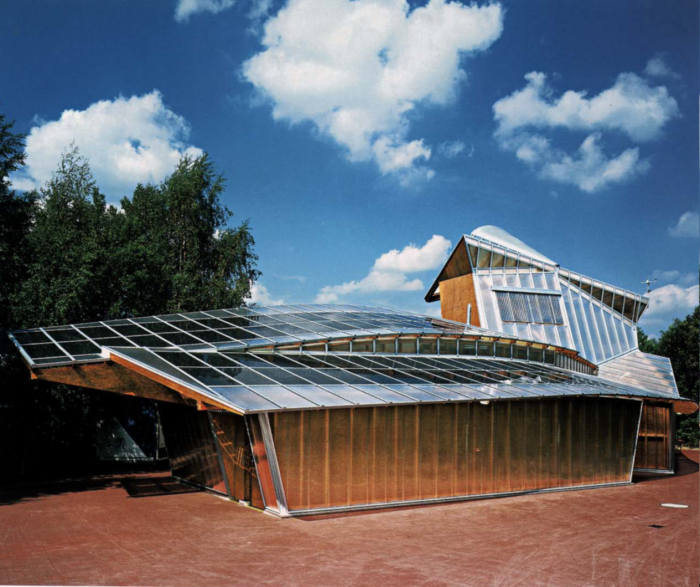
On Germany's Bath Island, the Steinhude Sea Recreation Facility supplies all of its power needs. Energy self-sufficiency is achieved with photovoltaic panels, solar hot water collectors, a seed-oil-fueled cogeneration microturbine, daylighting, natural ventilation, passive solar design, building automation, and high-performance materials. These systems provide complete lighting and power needs for the building, as well as enough energy to recharge a fleet of eight photovoltaic-powered rental boats, with excess electricity to sell back to the utility grid. This recreation center also employs graywater reuse and rainwater harvest systems that supply public and staff toilets. http://www.solaripedia.com/13/319/Steinhude+Rents+Solar-Powered+Boats.html

Monday, July 19, 2010

Zero Energy Community in California Innovated in 2003

Back in 2003 a housing development became California’s largest zero energy community with single family homes and an apartment complex powered by solar. Built by Clarum Homes, Vista MontaƱa in Watsonville was designed to reduce homeowner energy bills by up to 90 percent. Carrying the Zero Energy Home designation from the U.S. Department of Energy's National Renewable Energy Laboratory (NREL), the development housed the largest building-integrated solar electric system in an apartment community in the United States. The 60-kilowatt system by GE made it possible for this community to produce over 90 megawatt hours of electricity annually. In total, Vista Montana has 177 single-family homes, 80 townhouses, and 132 apartments that were built with 1.2 to 2.4 kWp, and with a calculated energy yield of 1400 kWh/kWp.

Friday, June 4, 2010

Biodynamic Farm Powers More Than Plants with Sun


Tani Creek Farm in the Pacific Northwest uses sunlight for more than just growing vegetables. In the misty hills of Bainbridge Island, across Puget Sound from Seattle, Washington, a 25-acre biodynamic farm uses solar power for all its agricultural needs such as irrigation, water movement (pumped from ponds to other uses) and food production, as well as for residential purposes. Contrary to popular belief, solar power in the cloudy Pacific Northwest - where Bainbridge is located - is a viable energy alternative to fossil fuels according to solar contractor Jeff Collum of Sound Power. The farm's 29-kilowatt system covers two outbuildings and are part of the owner's mission to create a self-sustaining farm that uses clean energy.

Sunday, May 2, 2010

PV System Fits into a Suitcase

This little portable solar electric system provides power so that remote medical clinics have lighting and the ability to charge walkie-talkies or radios for communication. Developed by We Care Solar, a non-profit organization that facilitates safer childbirth in third world countries, this PV device has been assembled by teenagers in Washington, D.C. to send to Haiti. http://www.wecaresolar.com/node/82

Monday, April 26, 2010

California Dreamin' at Claire's Bakery

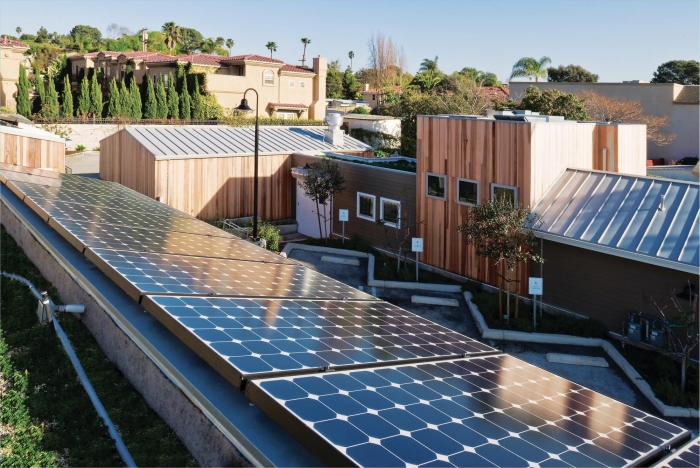
A San Diego, California, business carried its mission of serving up organic treats and coffee to a higher level. Claire's on Cedros  went for a full-on sustainability assault on site development, water use and energy efficiency of its entire operation. The result is a LEED Platinum-certified suite of small buildings that includes solar panels doubling as carports and awnings to provide shading. http://www.solaripedia.com/13/226/California+Dreamin%E2%80%99+at+Claire%E2%80%99s+Bakery.html

Sunday, February 7, 2010

Camping Supplies Are Solar Powered


Solar camping equipment complements the impact-free camping experience.When I was backpacking a couple of years ago in Colorado's Raggeds Wilderness area, friends brought a solar shower. They left it sitting on a rock while everyone was out exploring, and by the time of return, the water had heated to a toasty 125 degrees. The sun can also power lanterns and cell phones via backpacks and some new concept tents.http://www.solaripedia.com/13/182/camping_with_solar_friendly_devices.html

Tuesday, February 2, 2010

Largest US Solar Farm Soaks up Sun in Florida


And produces 25 megawatts of electricity! This $150 million plant came in $22.5 million under budget and took just 10 months to build - several months ahead of schedule. Its 92,000 solar panels can withstand 130-mph winds. The Desoto Solar Farm is built to last at least 30 years, and it will take from 25 to 30 years for Florida Power & Light, the owner, to recoup its investment. Construction of this facility also created 400 jobs!  http://www.solaripedia.com/13/180/florida_sun_powers_largest_us_solar_farm.html

Saturday, January 23, 2010

Hobbit House in Wales Made from Trees


http://www.solaripedia.com/13/175/low_impact_woodland_home_%28wales%29.htmlThe low impact woodland home built by Simon Dale in Wales conjures images of Hobbits baking bread in tiny hand-made ovens and friendly gatherings among the denizens of Middle Earth. But this extremely natural home also utilizes solar PV technology to bring lighting, music, refrigeration and computing power into this outgrowth of the forest. Dale and his father-in-law spent about four months and $6,000 building the home in 2008. Besides the PVs, they made it as sustainable as possible with oak, straw bale walls, roof and floor, a vegetated roof, and lime plaster on the walls.

Friday, January 15, 2010

Solar Power Used to Fly Airplane


Solar Impulse is an airplane powered by the sun. It provides a window for the technologies of the future, but already under development are solar cells offering a better efficiency-weight ratio, intelligent systems of energy management, materials as lightweight as they are resistant and a storage system to rival the most efficient. On earth at midday, each m2 of land surface receives the equivalent of 1000 Watts, or 1.3 horsepower of light power. Over 24 hours, this averages out to 250W/m2. With 200m2 of photovoltaic cells and a 12 percent total efficiency of the propulsion chain, the Solar Impulse airplane’s motors achieve no more than 8 HP or 6kW – roughly the amount of power the Wright brothers had a available to them in 1903 when they made their first powered flight. And it is with that small amount of energy, optimized from the solar panels to the propeller, that Solar Impulse is striving to fly day and night without fuel! Someday, the solutions developed for the solar airplane could find other applications in the building industry where efficiency and reliability are determining factors.

Wednesday, January 13, 2010

Learning with Sun and Nature at IslandWood


IslandWood, an outdoor learning center near Seattle, Washington, targets students from schools on free and reduced lunch programs for its School Overnight Program where they are immersed in experiences with nature and sustainability. The site and the buildings are designed to be sustainable, featuring solar meadows and building orientations that maximize passive solar gain. High performance windows optimize solar heat gain and reduce energy consumption. Natural ventilation replaces air conditioning, with operable window openings and skylights for maximum air circulation. Rainwater is collected from the roofs of several buildings and used for landscape irrigation. A Living Machine treats wastewater by using plants to filter impurities. Photovoltaics provide power and water is heated by the sun. Even trees that were cleared to make way for buildings and solar access have been cut, dried and milled and then used for exterior siding and interior trim throughout project.

Sunday, January 10, 2010

Umbrella House Reborn into Solar


Pugh+Scarpa Architects of Santa Monica adapted architect Paul Rudolph’s 1953 Umbrella House idea into a renovated California solar home. Rudolph's design used a trellis to shade the home from the hot Florida sun. P+S borrowed the idea of the trellis but installed solar panels into a steel-beam canopy that shades their new house, while providing electricity. The canopy is part of a 4.5-kilowatt solar system that powers almost the entire 1,900-square-foot house and the pool. There are 89 BP Solar amorphous photovoltaic solar panels mounted in the steel-beamed structures, on the roof, and atop the carport. “It’s not rocket science,” says project architect Angela Brooks. “Our system is simple. We used normal electricity. We did the wiring diagrams. It could all be done by a nonprofessional.”

Saturday, January 9, 2010

Wisconsin Home Powered by Solar, Wind and Geothermal


This home on 40 acres in Wisconsin is designed to provide power and water off the grid for its needs. The design incorporates sustainable principles, including solar hot water, a wind turbine, geothermal heating, passive solar, and natural ventilation. Rainwater runoff is collected into a pond that is integrated into the geothermal system. Sustainable materials throughout the home include concrete floors and countertops that are durable, easy to maintain with non-toxic cleaners and provide thermal mass for utilizing passive design principles.

Wednesday, December 16, 2009

Open PV Database Tracks US Solar Installations


The Open PV Project is a community-driven database, fostered by the National Renewable Energy Laboratory, of photovoltaic (PV) installations around the US. It collects, organizes and distributes info on location, size, cost and date of every PV installation in the USA. A very cool animation is superimposed on a US map showing all logged PV systems installed since 1998.

Sunday, December 13, 2009

Recycling Solar PV Panels


In its whitepaper "Toward a Just and Sustainable Solar Energy Coalition" the Silicon Valley Toxics Coalition (SVTC) argues that for solar to be truly green, industry must reduce and eventually eliminate the use of toxic materials and develop environmentally sustainable practices.