
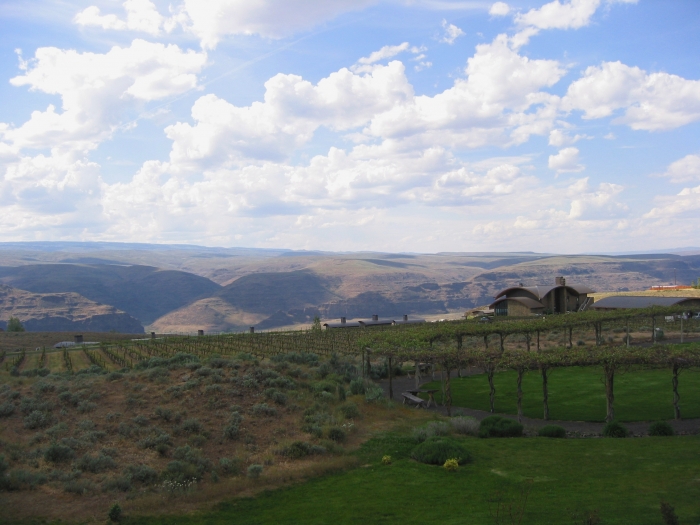
Designed by Olson Kundig Architects of Seattle, the Cave B Winery is comprised of the Cave B Inn, Lodge and 15 guesthouses at Sagecliffe, surrounded by estate vineyards and orchards. First planted in 1980, Cave B grows a broad range of varietals that are possible due to the microclimates of its distinctive cliffside location 900 feet above the Columbia River. The placement of multiple buildings on the site and their organization were informed by topographical and geological conditions on the site, particularly the basalt cliffs, and rocky outcroppings and talus. Much of the stone for the buildings was harvested on-site or from nearby quarries. This winery helps educate local school kids about organic gardening and heirloom vegetables, as well as the benefits of eating locally. Its recycling program includes sharing grape skins with a local farm that uses them for feeding dairy cows, and providing old wine bottles to a company that remakes them into wine goblets and other useful items.


