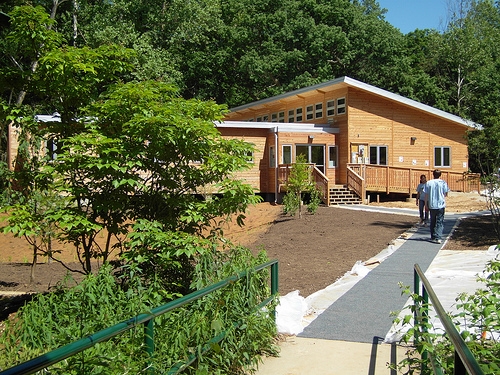
Buildings of the future will most likely all behave like the Living Learning Center at Washington University in St. Louis, Missouri. As part of the Tyson Research Center, this 2,900-square-foot facility is designed to be a zero net energy and zero wastewater building. It captures rainwater and purifies it for drinking, and is powered so efficiently by solar energy that the building pumps energy into the electric grid to be purchased by the local energy company. During construction, a high percentage of construction waste (80 percent or more, depending on the material) was diverted from landfills and most materials were obtained from within a close radius of the construction site to reduce carbon emissions from travel and shipping - a lot of the wood in the project came from trees on the site. Occupational spaces contain operable windows to provide access to fresh air and daylight, and classrooms feature large roll-up doors for indoor/outdoor space.