For interstellar travel, light-sail craft would depend on extremely large-scale constructions such as huge solar-power relays around Mercury and enormous Fresnel zones in the outer Solar System. Since light applies pressure to surfaces, the stream of photons can be used for propulsion in a near-frictionless environment. This concept is the background for light (or solar) sails. It is a method of space travel that would negate the need for on-board fuel. Sails using the solar wind or only the light from stars are less efficient at larger distance from the Sun. Read more at SOLARIPEDIA.com
Saturday, November 14, 2009
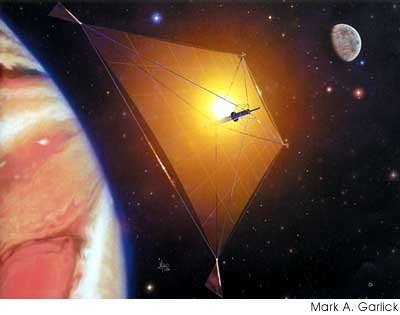
Solar Electric Sails in Space
For interstellar travel, light-sail craft would depend on extremely large-scale constructions such as huge solar-power relays around Mercury and enormous Fresnel zones in the outer Solar System. Since light applies pressure to surfaces, the stream of photons can be used for propulsion in a near-frictionless environment. This concept is the background for light (or solar) sails. It is a method of space travel that would negate the need for on-board fuel. Sails using the solar wind or only the light from stars are less efficient at larger distance from the Sun. Read more at SOLARIPEDIA.com
Friday, November 13, 2009
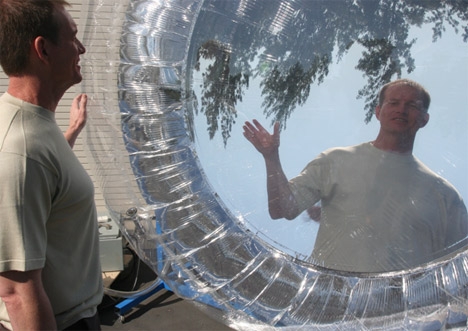
Solar Balloons Provide Electric Power
Instead of large expensive solar panels or costly concentrating mirrors, Cool Earth uses balloons made of metalized plastic films. Half of the balloon is transparent, letting the light in to be concentrated into a small, high-efficiency solar panel by the concave interior, providing from 500 watts to 1 kilowatt. They are supported by cables, leaving the ground below clear and limiting environmental impact. See Cool Earth website
Wednesday, November 11, 2009
Kurilpa Bridge Is Solar Powered
The Australian city of Brisbane opened the world's first large-scale solar-powered bridge. The 470m Kurilpa Bridge accommodates pedestrians and bicycles, and sports 84 solar panels that power an array of light-emitting diodes (LEDs). The panels supply between 75 and 100 per cent of the bridge's lighting needs. Read more on Solaripedia
Labels:
australia,
bridge,
brisbane,
LED lighting,
photovoltaics,
PVs,
solar bridge,
solar lighting
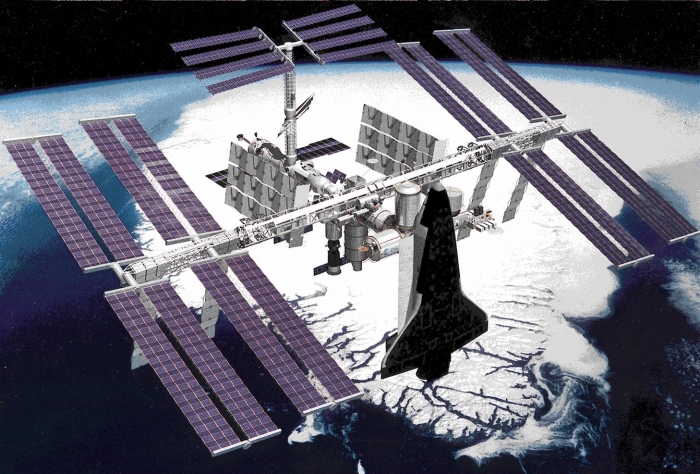
International Space Station All Solar Powered
The most powerful solar arrays ever to orbit Earth capture the sun's energy and begin the process of converting it into power for the International Space Station (ISS). Eight solar panels supply more than 100 kilowatts of electric power to the station. The panels are mounted on a metal framework 360 feet (109 meters) long. The International Space Station is a large, inhabited Earth satellite that more than 15 nations are building in space. The first part of the station was launched in 1998 and it orbits Earth at an altitude of about 250 miles (400 kilometers). Visit the NASA International Space Station website. See more images at SOLARIPEDIA.com
Labels:
ISS,
photovoltaics,
PVs,
solar power in space,
space station
Subscribe to:
Comments (Atom)