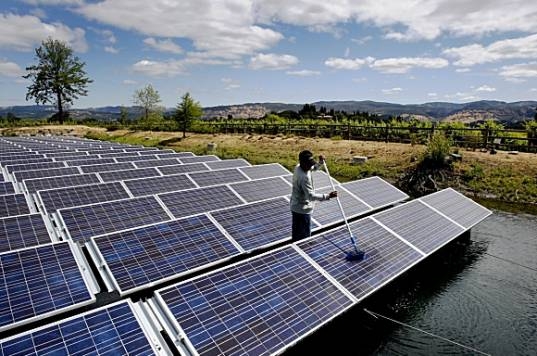
Vigneron Gary Cox set a long-term goal of environmental sustainability for his Cox Canyon Vineyards and Ellensburg Canyon Winery in 1999, becoming the first sustainable vineyard and winery in Kittitas County, Washington USA. Recently, Cox invested in renewable energy by installing solar panels on his property to provide energy for processing his cabernet franc, riesling and malbec wine grapes. Cox's solar array comprises 85 solar panels on a portion of his 17-acre vineyard that wouldn't accommodate vines anyway. Read to full article here: Yakima Magazine Article MARCH 2017
Showing posts with label PVs. Show all posts
Friday, March 31, 2017
Thursday, August 25, 2016
DAR Historic Building in Washington, D.C. Uses Solar Power
The Daughters of the American Revolution (DAR) Constitution Hall photovoltaic system helps the DAR to stabilize and reduce electric energy costs for its complex of historic buildings in Washington, D. C., just a few hundred yards from the White House. The rooftop 59kW solar panel array installation was completed in June 2014 and produces about 100,786 kWh of energy per year to help offset the energy demand of DAR Headquarters. Designed to house the annual DAR convention, Constitution Hall (as of August 2015) was designated a National Historic Landmark Building in 1985 and is Washington D.C.’s largest Concert Hall, with more than half a million patrons each year. DAR has had a conservation committee dedicated to environmental issues for more than 105 years.
DAR Historic Hall Uses Solar Power
2016 Summer Olympics Stadium in Rio Sports Solar Power
Maracana Stadium in Rio, site of the 2016 Summer Olympics, is ringed by more than 1,552 rooftop solar panels from China. Since the 2014 World Cup, the 390 kW solar power system has been providing free, unlimited clean energy to the stadium, reducing 2,560 tons of carbon dioxide emissions each year. Brazil uses mostly hydropower but the country has one of the highest solar incidences in the world – every square meter exposed to the sun in Rio receives enough energy to run the average Brazilian shower for more than an hour per day. Sustainability Plan for 2016 Olympics:https://www.rio2016.com/sustentabilidade/en/
Labels:
brazil,
photovoltaics,
PVs,
stadium,
summer olympics 2016
Wednesday, May 18, 2016
Solar-Powered Greenhouse Fosters New Growth in Old Pittsburgh Neighborhood
In the economically distressed Homewood
neighborhood of Pittsburgh sits a greenhouse that is mere feet from city
utilities infrastructure, but there are no city utility connections in this
building. Powered exclusively by energy from the sun through a revolutionary DC
micro grid, the Homewood greenhouse requires no supplementary heat, energy, or
water. Inside the greenhouse, Oasis Farms and Fishery is perfecting the revolutionary agricultural
technology called aquaponics, where plants are combined with aquatic life
to create a sustainable, diverse system of food growth and cultivation. It is a
revolutionary urban farming initiative that provides a model for agricultural,
economic, and sustainable development for even the most remote and
under-privileged locations. Designed to increase food productivity and density,
especially in urban areas, this experimental greenhouse not only grows food,
but acts as a global model for developing nations.
The greenhouse includes:
- Aquaponics systems to grow plants and fish
- A STEM (Science, Technology, Engineering, Math)
education classroom under a solar canopy
- A rainwater collection and purification system, with
both 1,200 and 500-gallon cisterns, that uses a series of ultraviolet
light, filters, and pumps to make the water safe for the aquatic living
environment
- Maintenance-free materials and design
- Zero operating cost
Labels:
photovoltaics,
Pittsburgh,
PVs,
solar greenhouse
Friday, November 20, 2015
Modular, Ultra-Green, Solar Classroom Inspires Sustainability
Unveiled in 2015, this could be the classroom of the future. Located at the Phipps Conservatory in Pittsburgh, this is one of the first completely sustainable, modular classrooms in the U.S. Fabricated by EcoCraft Homes and developed by the SEED Collaborative, the SEED Classroom features non-toxic materials, generates its own energy, and recycles water on-site. A hands-on sustainable learning space built to Living Building Challenge standards, it impacts thousands of children with its net-zero energy, net-zero water, sustainable materials, daylighting, urban agriculture and equity components.
http://www.solaripedia.com/13/422/SEED+Classroom+Inspires+%28Pittsburgh%2C+USA%29.html
TAGS: green architecture, green building, modular construction, passive house, solar, energy efficient, pittsburgh
http://www.solaripedia.com/13/422/SEED+Classroom+Inspires+%28Pittsburgh%2C+USA%29.html
TAGS: green architecture, green building, modular construction, passive house, solar, energy efficient, pittsburgh
Labels:
modular classroom,
photovoltaics,
Pittsburgh,
PVs
Saturday, August 4, 2012
Alcatraz Island Completes Photovoltaic System
Two years ago, in June 2010, we reported that Alcatraz Island was planning to go solar.We're happy to report now that the former prison is host to 1,300 solar panels, powering lights and appliances
that for 75 years were powered by diesel fuel
ferried across San Francisco Bay. Hurray for the National Park Service
(NPS) and the U.S. Department of Energy's (DOE) National Renewable
Energy Laboratory (NREL) to bring clean energy to national parks and
landmarks! The 307-kilowatt photovoltaic (PV) array sits on the roof of the main
Cellhouse building (shown in the photo), attached to two 2,000-amp-hour battery strings and
an inverter plant. The new 1,300-panel system produces close to 400,000
kilowatt-hours of electricity a year, reducing carbon dioxide (CO2)
emissions by about 337,000 kilograms a year and reducing the time the
diesel generator runs from 100% to 40%. The NPS also made energy
efficiency changes, such as better light bulbs and changes in operation
to reduce energy consumption. A massive solar battery system helps power the island when the sun
doesn't shine — and it, too, is hidden from the view of the 1.4 million
visitors the island and prison get each year. http://www.solaripedia.com/13/255/alcatraz_going_solar_with_1,360_panels.html
Labels:
active solar,
alcatraz,
california,
photovoltaics,
PVs,
USA
Tuesday, July 24, 2012
Recreation Center in Germany Powers with Solar
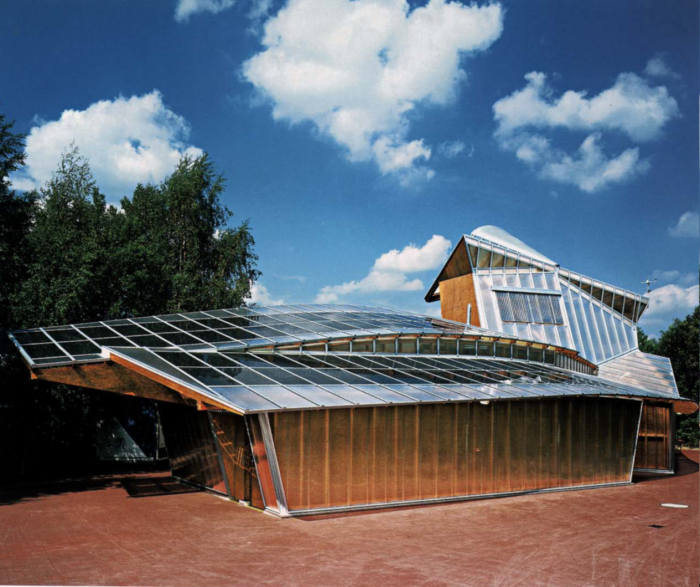
On Germany's Bath Island, the Steinhude Sea Recreation Facility supplies all of its power needs. Energy self-sufficiency is achieved with photovoltaic panels, solar hot
water collectors, a seed-oil-fueled cogeneration microturbine,
daylighting, natural ventilation, passive solar design, building
automation, and high-performance materials. These systems provide
complete lighting and power needs for the building, as well as enough
energy to recharge a fleet of eight photovoltaic-powered rental boats,
with excess electricity to sell back to the utility grid. This recreation center also employs graywater reuse and rainwater harvest systems that supply public and staff toilets. http://www.solaripedia.com/13/319/Steinhude+Rents+Solar-Powered+Boats.html
Labels:
germany,
passive solar,
photovoltaics,
PVs,
rec center
Friday, June 4, 2010
Biodynamic Farm Powers More Than Plants with Sun
Tani Creek Farm in the Pacific Northwest uses sunlight for more than just growing vegetables. In the misty hills of Bainbridge Island, across Puget Sound from Seattle, Washington, a 25-acre biodynamic farm uses solar power for all its agricultural needs such as irrigation, water movement (pumped from ponds to other uses) and food production, as well as for residential purposes. Contrary to popular belief, solar power in the cloudy Pacific Northwest - where Bainbridge is located - is a viable energy alternative to fossil fuels according to solar contractor Jeff Collum of Sound Power. The farm's 29-kilowatt system covers two outbuildings and are part of the owner's mission to create a self-sustaining farm that uses clean energy.
Monday, April 26, 2010
California Dreamin' at Claire's Bakery
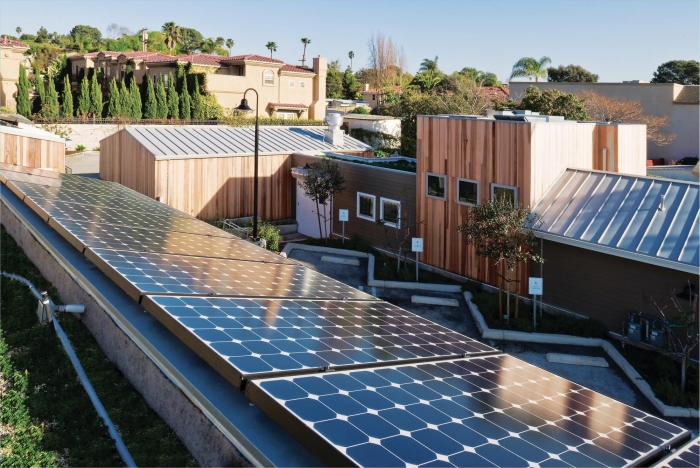
A San Diego, California, business carried its mission of serving up organic treats and coffee to a higher level. Claire's on Cedros went for a full-on sustainability assault on site development, water use and energy efficiency of its entire operation. The result is a LEED Platinum-certified suite of small buildings that includes solar panels doubling as carports and awnings to provide shading. http://www.solaripedia.com/13/226/California+Dreamin%E2%80%99+at+Claire%E2%80%99s+Bakery.html
Labels:
bakery,
business,
LEED platinum,
photovoltaics,
PVs,
san diego,
solar carport,
solar panels,
solar shading,
sustainability
Tuesday, February 2, 2010
Largest US Solar Farm Soaks up Sun in Florida
And produces 25 megawatts of electricity! This $150 million plant came in $22.5 million under budget and took just 10 months to build - several months ahead of schedule. Its 92,000 solar panels can withstand 130-mph winds. The Desoto Solar Farm is built to last at least 30 years, and it will take from 25 to 30 years for Florida Power & Light, the owner, to recoup its investment. Construction of this facility also created 400 jobs! http://www.solaripedia.com/13/180/florida_sun_powers_largest_us_solar_farm.html
Wednesday, December 16, 2009
Open PV Database Tracks US Solar Installations
The Open PV Project is a community-driven database, fostered by the National Renewable Energy Laboratory, of photovoltaic (PV) installations around the US. It collects, organizes and distributes info on location, size, cost and date of every PV installation in the USA. A very cool animation is superimposed on a US map showing all logged PV systems installed since 1998.
Sunday, December 13, 2009
Recycling Solar PV Panels
In its whitepaper "Toward a Just and Sustainable Solar Energy Coalition" the Silicon Valley Toxics Coalition (SVTC) argues that for solar to be truly green, industry must reduce and eventually eliminate the use of toxic materials and develop environmentally sustainable practices.
Labels:
materials,
photovoltaics,
PVs,
recycling,
solar industry,
solar panel manufacture
Wineries and Thieves Go Solar in California
Solar energy is hot, according to Mike Treleven reporting in the Napa Valley Register (27 November 2009). Not just with wineries attempting to lessen their carbon footprints — but also with thieves. Numerous Napa Valley wineries have been victimized by thieves lurking in the night and stealing their solar arrays. A single panel is worth about $1,000, measures two feet by three feet and weighs around 35 pounds. Between June 2008 and late September 2009, Napa County saw 14 solar thefts and two attempted thefts. Of the 14 thefts, two were in the city of Napa and the rest were at wineries around the valley, Napa County Sheriff’s Capt. Tracey Stuart. More than 400 panels, worth about $400,000, have been stolen.
Tuesday, December 8, 2009
Wheelchair Accessible Treehouse Uses Solar
Camp Twin Lakes wheelchair-accessible treehouse features a solar array, a vegetated roof and composting toilets in Georgia, USA. A 1.4-kilowatt, eight-module photovoltaic solar array is mounted on a nearby pole and supplies the treehouse fans and misting system pump with DC power.
Labels:
accessible,
ADA,
camp,
composting toilet,
photovoltaics,
PVs,
rainwater collection,
solar panels,
solar power
Thursday, December 3, 2009
The Power of the Sun
Labels:
feed-in tariffs,
FiTs,
photovoltaics,
PVs,
REPs,
solar energy,
solar industry,
urban renewable energy
Saturday, November 14, 2009
Solar Electric Sails in Space
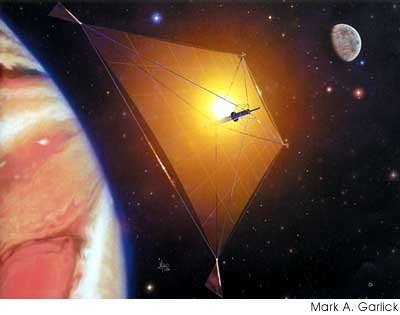
For interstellar travel, light-sail craft would depend on extremely large-scale constructions such as huge solar-power relays around Mercury and enormous Fresnel zones in the outer Solar System. Since light applies pressure to surfaces, the stream of photons can be used for propulsion in a near-frictionless environment. This concept is the background for light (or solar) sails. It is a method of space travel that would negate the need for on-board fuel. Sails using the solar wind or only the light from stars are less efficient at larger distance from the Sun. Read more at SOLARIPEDIA.com
Friday, November 13, 2009
Solar Balloons Provide Electric Power
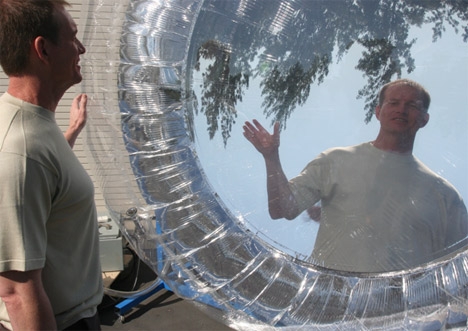
Instead of large expensive solar panels or costly concentrating mirrors, Cool Earth uses balloons made of metalized plastic films. Half of the balloon is transparent, letting the light in to be concentrated into a small, high-efficiency solar panel by the concave interior, providing from 500 watts to 1 kilowatt. They are supported by cables, leaving the ground below clear and limiting environmental impact. See Cool Earth website
Wednesday, November 11, 2009
Kurilpa Bridge Is Solar Powered
The Australian city of Brisbane opened the world's first large-scale solar-powered bridge. The 470m Kurilpa Bridge accommodates pedestrians and bicycles, and sports 84 solar panels that power an array of light-emitting diodes (LEDs). The panels supply between 75 and 100 per cent of the bridge's lighting needs. Read more on Solaripedia
Labels:
australia,
bridge,
brisbane,
LED lighting,
photovoltaics,
PVs,
solar bridge,
solar lighting
International Space Station All Solar Powered
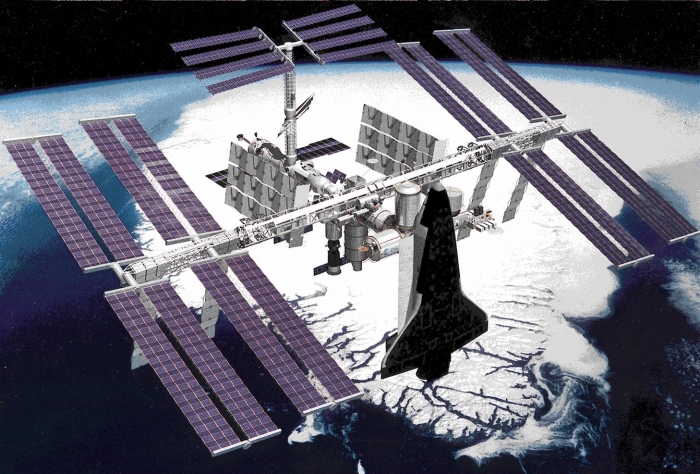
The most powerful solar arrays ever to orbit Earth capture the sun's energy and begin the process of converting it into power for the International Space Station (ISS). Eight solar panels supply more than 100 kilowatts of electric power to the station. The panels are mounted on a metal framework 360 feet (109 meters) long. The International Space Station is a large, inhabited Earth satellite that more than 15 nations are building in space. The first part of the station was launched in 1998 and it orbits Earth at an altitude of about 250 miles (400 kilometers). Visit the NASA International Space Station website. See more images at SOLARIPEDIA.com
Labels:
ISS,
photovoltaics,
PVs,
solar power in space,
space station
Thursday, November 5, 2009
Zero Energy Home near Seattle Opens to Public
The Zero Energy Idea House at Bass Cove, near Seattle in Washington State, will provide approximately 5 kW of electricity to the home from its rooftop photovoltaics and a vertical axis wind generator. The home’s domestic hot water is also heated by the sun. The floors, walls, and roof of the Zero Energy Idea House are built with structural insulated panels, or SIPs, that are constructed with expanded polystyrene (EPS) foam sandwiched between sheets of OSB (oriented strand board), which is an engineered wood product made from small pieces of scrap wood. Read more at the project website The home is open the weekend of 7 & 8 November 2009. Image by Northwest Property Imaging.
Subscribe to:
Posts (Atom)