The Casa ISEAMI is located in the rainforest of Costa Rica, where its humid environment encourages mold and fungi growth on buildings. The architects for ISEAMI - Robles Arquitectos - therefore designed this house using an all-white structure that allows mold and other pests to be revealed immediately. Casa ISEAMI is totally off-grid using an on-site hydropower system plus photovoltaics on the roof - two micro hydro turbines generate 800 kWh per year and a rooftop solar system generates 10,800 kWh annually. The casa utilizes passive solar design with large overhangs for shade and rainwater collection, and its orientation maximizes natural ventilation. Large skylights provide daylighting and an almost direct connection for inhabitants to the sky. A solar thermal system provides hot water. The Casa provides headquarters for Costa Rica-based ISEAMI (Institute for Sustainability, Ecology, Art, Mind and Investigation). The house is situated on a hill above the ocean on the biologically diverse Peninsula de Osa, 30km from the nearest town. The area contains five percent of the world`s biodiversity so it was imperative for the Institute to create a building that has virtually no negative impact on the surrounding environment. Building materials are recyclable at the end of their useful lives. The casa is the first phase of building houses a multifunctional space for ISEAMI (Institute of Sustainability, Ecology, Art,Mind and Investigation) on the ground level, with the second level providing a residence for the Institute`s director.
Showing posts with label PV. Show all posts
Monday, January 3, 2011
Sunday, December 5, 2010
Recreation Center in Germany Powers with Solar
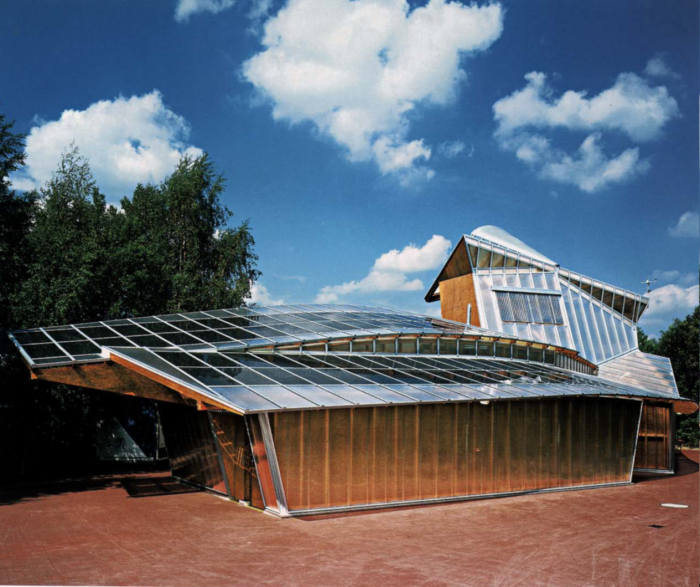
The Steinhude Sea Recreation Facility building is only about 3,500 square feet with services for public toilets, lifeguard facilities, a small cafe, an observation deck, boat storage and a generator for supplemental power for the kitchen. Its photovoltaic system provides enough power for the building needs, as well as for recharging a fleet of eight solar-powered rental boats. There's even excess power to sell back to the grid. The PV panels (153 square meters in surface area) are integrated into and stretched along a sweeping roof that also provides daylighting with its innovative glazing system. A natural gas turbine generator provides additional power for peak loads associated with the cafe. The project is located on the south shore of Steinhude Sea in north-central Germany; it is on the 46,000 square meter (11.4 acres) Bath Island, attached by a bridge to the mainland.
Monday, July 19, 2010
Zero Energy Community in California Innovated in 2003
Back in 2003 a housing development became California’s largest zero energy community with single family homes and an apartment complex powered by solar. Built by Clarum Homes, Vista MontaƱa in Watsonville was designed to reduce homeowner energy bills by up to 90 percent. Carrying the Zero Energy Home designation from the U.S. Department of Energy's National Renewable Energy Laboratory (NREL), the development housed the largest building-integrated solar electric system in an apartment community in the United States. The 60-kilowatt system by GE made it possible for this community to produce over 90 megawatt hours of electricity annually. In total, Vista Montana has 177 single-family homes, 80 townhouses, and 132 apartments that were built with 1.2 to 2.4 kWp, and with a calculated energy yield of 1400 kWh/kWp.
Sunday, May 2, 2010
PV System Fits into a Suitcase
This little portable solar electric system provides power so that remote medical clinics have lighting and the ability to charge walkie-talkies or radios for communication. Developed by We Care Solar, a non-profit organization that facilitates safer childbirth in third world countries, this PV device has been assembled by teenagers in Washington, D.C. to send to Haiti. http://www.wecaresolar.com/node/82
Tuesday, March 9, 2010
Solar-Powered Yacht Cruises the Seas on Less Diesel
Thanks to its innovative hull design, the WHY solar-powered yacht requires less power at cruising speed than a boat of equal size. Its diesel-electric propulsion is the most efficient motorization today, and the surface of the photovoltaic panels - almost 900 square meters - covers most of the boat’s auxiliary system needs.
Its PV power is estimated to save up to 200 tons of diesel per year. http://www.solaripedia.com/13/200/roof_goes_electric_on_solar_why_yacht.html
Labels:
concentrating solar power,
house boat,
photovoltaic boat,
PV,
solar boat,
yacht
Sunday, February 7, 2010
Camping Supplies Are Solar Powered
Solar camping equipment complements the impact-free camping experience.When I was backpacking a couple of years ago in Colorado's Raggeds Wilderness area, friends brought a solar shower. They left it sitting on a rock while everyone was out exploring, and by the time of return, the water had heated to a toasty 125 degrees. The sun can also power lanterns and cell phones via backpacks and some new concept tents.http://www.solaripedia.com/13/182/camping_with_solar_friendly_devices.html
Saturday, January 23, 2010
Hobbit House in Wales Made from Trees
http://www.solaripedia.com/13/175/low_impact_woodland_home_%28wales%29.htmlThe low impact woodland home built by Simon Dale in Wales conjures images of Hobbits baking bread in tiny hand-made ovens and friendly gatherings among the denizens of Middle Earth. But this extremely natural home also utilizes solar PV technology to bring lighting, music, refrigeration and computing power into this outgrowth of the forest. Dale and his father-in-law spent about four months and $6,000 building the home in 2008. Besides the PVs, they made it as sustainable as possible with oak, straw bale walls, roof and floor, a vegetated roof, and lime plaster on the walls.
Labels:
photovoltaics,
PV,
residential,
sustainable home,
wales
Sunday, January 10, 2010
Umbrella House Reborn into Solar
Pugh+Scarpa Architects of Santa Monica adapted architect Paul Rudolph’s 1953 Umbrella House idea into a renovated California solar home. Rudolph's design used a trellis to shade the home from the hot Florida sun. P+S borrowed the idea of the trellis but installed solar panels into a steel-beam canopy that shades their new house, while providing electricity. The canopy is part of a 4.5-kilowatt solar system that powers almost the entire 1,900-square-foot house and the pool. There are 89 BP Solar amorphous photovoltaic solar panels mounted in the steel-beamed structures, on the roof, and atop the carport. “It’s not rocket science,” says project architect Angela Brooks. “Our system is simple. We used normal electricity. We did the wiring diagrams. It could all be done by a nonprofessional.”
Saturday, January 9, 2010
Wisconsin Home Powered by Solar, Wind and Geothermal
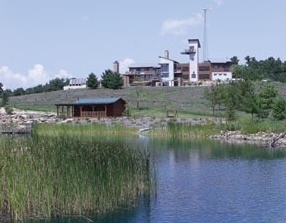
This home on 40 acres in Wisconsin is designed to provide power and water off the grid for its needs. The design incorporates sustainable principles, including solar hot water, a wind turbine, geothermal heating, passive solar, and natural ventilation. Rainwater runoff is collected into a pond that is integrated into the geothermal system. Sustainable materials throughout the home include concrete floors and countertops that are durable, easy to maintain with non-toxic cleaners and provide thermal mass for utilizing passive design principles.
Subscribe to:
Comments (Atom)