
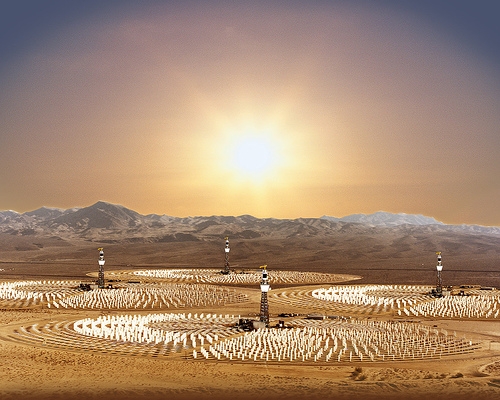
 Read about solar in the US by author Robin Rogers on the Eco-Intel.com blog.
Thursday, December 3, 2009


Wednesday, December 2, 2009
Monash Science Building Uses Passive Design
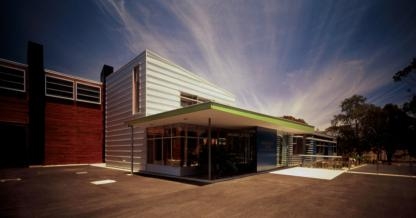
The Monash Science Centre of Monash University in Australia, utilizes passive and active measures for north-facing windows, manual and automatic louvers for ventilation, thermal chimneys with reversible fans and underfloor hydronic geothermal heating, using the nearby lake as a heat sink.
Saturday, November 28, 2009
Lagniappe House Makes Solar Right in New Orleans

The Lagniappe House in New Orleans was designed with Cradle to Cradle concepts including building orientation for passive and solar energy, selection of materials, management of energy and water, and the features provided to promote passive survivability in the event of another catastrophe.
Monday, November 23, 2009
Forest EcoCentre Employs Passive Design
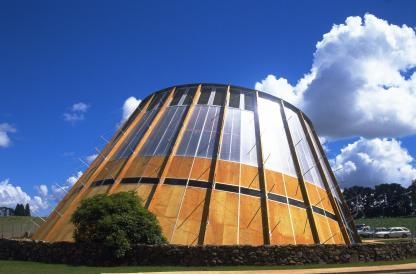
Robert Morris-Nunn’s Forest EcoCentre, completed in 2001 in Tasmania, Australia, demonstrates effective climate control through clever orientation, appropriate applications of material, and passive energy use. Learn more
Saturday, November 14, 2009
Solar Electric Sails in Space
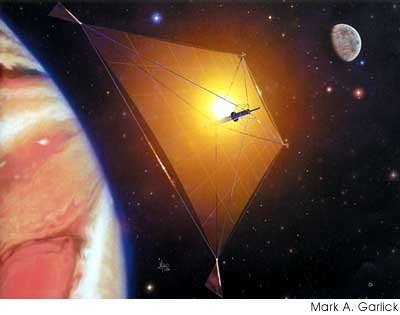
For interstellar travel, light-sail craft would depend on extremely large-scale constructions such as huge solar-power relays around Mercury and enormous Fresnel zones in the outer Solar System. Since light applies pressure to surfaces, the stream of photons can be used for propulsion in a near-frictionless environment. This concept is the background for light (or solar) sails. It is a method of space travel that would negate the need for on-board fuel. Sails using the solar wind or only the light from stars are less efficient at larger distance from the Sun. Read more at SOLARIPEDIA.com
Friday, November 13, 2009
Solar Balloons Provide Electric Power
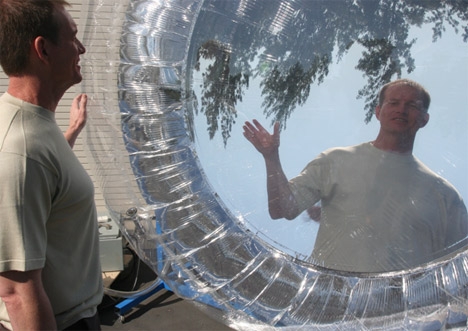
Instead of large expensive solar panels or costly concentrating mirrors, Cool Earth uses balloons made of metalized plastic films. Half of the balloon is transparent, letting the light in to be concentrated into a small, high-efficiency solar panel by the concave interior, providing from 500 watts to 1 kilowatt. They are supported by cables, leaving the ground below clear and limiting environmental impact. See Cool Earth website
Wednesday, November 11, 2009
Kurilpa Bridge Is Solar Powered

The Australian city of Brisbane opened the world's first large-scale solar-powered bridge. The 470m Kurilpa Bridge accommodates pedestrians and bicycles, and sports 84 solar panels that power an array of light-emitting diodes (LEDs). The panels supply between 75 and 100 per cent of the bridge's lighting needs. Read more on Solaripedia
Subscribe to:
Posts (Atom)
