Wednesday, November 4, 2009

Greening Our White Ski Resorts


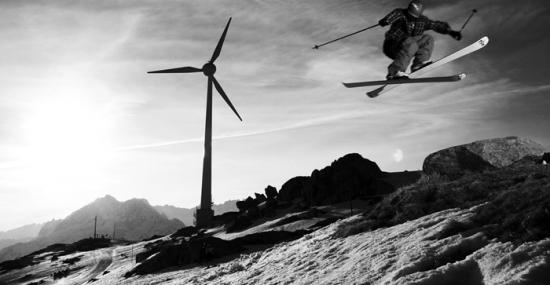
As ski season approaches in the Northern Hemisphere, many resorts continue to find ways to offer more sustainable approaches to one of the favorite outdoor sports. While none is generating 100 percent of its own renewable energy, many are either generating some of their own power or purchasing renewable energy from utilities. According to a report by the National Geographic Society, at least 22 US ski resorts in seven states use wind power credits to supply 100 percent of their electricity use. Sustainable ski programs help you find and select “green” resorts, and provide listings of the sustainable attributes, including efforts in solar and wind power, transportation, water conservation and protection, vegetation and wildlife conservation, and energy efficiency. A few websites help sort through resorts:
Ski Area Environmental Scorecard
Ski Green Guide
Ski Green
Sustainable Slopes

Monday, November 2, 2009

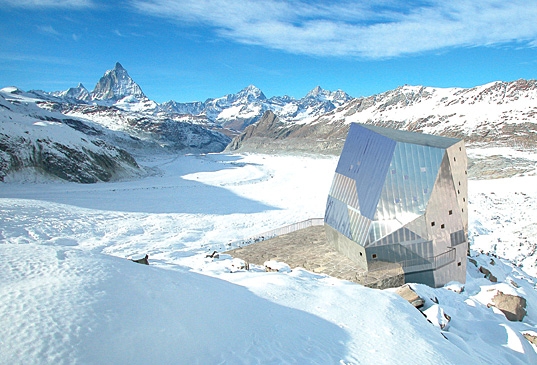
Swiss Alpine Hut Powered by the Sun


The Monte Rosa Hut above Zermatt, Switzerland, is nicknamed "Mountain Crystal". The innovative building generates over 90 percent of its own energy and will serve the Swiss Federal Technical University in Zurich as an on-going research project in power and building service engineering. 2,883 meters above sea level, the New Monte Rosa Hut is currently the most complex wooden construction in Switzerland. Covered in a shimmering silver aluminum shell and with a photovoltaic system integrated in the southern facade, it generates its own power and is expected to be at least 90 percent energy self-sufficient. Solar collectors installed in the grounds generate solar heat, which provides warm water and heats the ventilation system's supply air to control the temperature in the rooms. In the few months of the year where the ice melts, the water is collected and stored in a cavern to provide the guests with flush toilets and four hot showers. A bacteria-based microfiltration system cleans the sewage; the graywater is then reused to flush the toilet and for washing. See more images at SOLARIPEDIA.com

Sunday, November 1, 2009

NYC Plans for Green Jobs


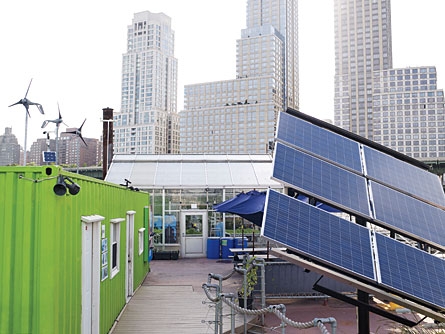
New Yorkers have turned the vision of a new greencollar economy into a realistic blueprint for implementation that other cities can follow - the NYC Green Jobs Roadmap. The plan recommends and outlines an inclusive green economy that employs thousands in green-collar jobs that help upgrade infrastructure, improve the health of our communities, and reduce our nation’s reliance on imported energy that degrades the environment. It estimates that investment in solar energy would create 42 percent more job-years per dollar than a comparable investment in fossil fuel. The Roadmap assumes that the city needs to adopt a greener, more sustainable economic growth agenda to thrive. As a global city surrounded by water, New York is particularly vulnerable to global climate instability and energy supply volatility. Globally, 634 million people live in areas most vulnerable to rising seas. The Roadmap articulates the steps necessary to make sure that the path leads to strong economic growth, good jobs, and broadly shared benefits for all New Yorkers. Read more on SOLARIPEDIA.com

Saturday, October 31, 2009

REI Round Rock Store Employs the Sun


The REI Round Rock store has an exceptionally efficient heating, ventilation and air conditioning system and building envelope, more than 80 percent reduction of construction waste, green building education program and rooftop solar panel installation. Mounting on the green building success of its previous stores, including one in Boulder, Colorado, this second generation of green prototype store in Round Rock, Texas, is projected to consume 48% less energy than a typical store and generate a portion of its power from a solar panel installation and building integrated photovoltaics. Read about it and see pix on SOLARIPEDIA.com

Wednesday, October 28, 2009

Seattle Aquarium Retrofits with Solar Hot Water


The Seattle Aquarium unveiled Seattle’s first solar hot water demonstration project 16 June 2009, a system that will reduce the Aquarium’s use of natural gas by preheating water used in the second floor cafĂ©. Installed by A & R Solar of Seattle, the five solar panels will shrink the Aquarium’s carbon footprint by 2.5 tons of CO2 each year, and teach the Aquarium’s 800,000 visitors about renewable energy sources. “Sustainable energy is linked to sustainable oceans,” Aquarium Director John Braden said. “Over 200 years of increasing CO2 emissions have carbonated the oceans and increased its acidity, threatening marine food webs, including plankton, shellfish, fish, birds, mammals and humans. With this solar project, we hope to provide a model of sustainability that can inspire our visitors and other zoos and aquariums to do what they can to take Climate Action Now.” Read more and see pix at SOLARIPEDIA.com.

Tuesday, October 27, 2009

Tethered Sails Power Cargo Ships with Wind


It’s an idea that has been tested: a giant sail is attached to a heavy cargo ship, or smaller boat, to capture wind power, thereby reducing fossil fuel consumption, costs and pollution. One company, SkySails, reports that its kite sail will help reduce annual fuel costs by ten to 35 percent, with fewer harmful carbon emissions. The large towing kite resembles a paraglider and is shaped like an aircraft wing to enable it to take advantage of different wind directions. It operates at 100-300m above surface level - much higher than a normal sailing craft - where winds are stronger and more stable. The kite can be used in winds of 12-74km/h (7-40 knots) and not just when the wind is blowing directly from behind the ship. At SOLARIPEDIA.com, we look at two different kite systems from two companies, SkySails and KiteShip. Read more and see pix

Monday, October 26, 2009

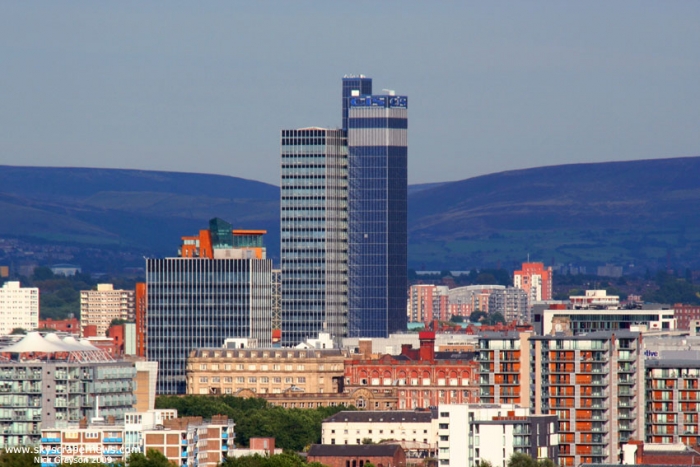
Solar Retrofit in UK Works Despite Clouds


Contrary to popular belief, light levels in the UK are sufficient to make photovoltaic cells viable throughout the country, with photovoltaics generating power even on cloudy days. In addition, solar energy works well in built-up urban areas and can be retro-fitted to existing buildings and houses relatively cheaply, to produce truly local power. The CIS Tower in Manchester, UK, provides an example of how a 1962 building was retrofitted with photovoltaics to provide part of the building’s power. The building was clad with a total of 7,244 Sharp photovoltaic panels generating 390kW of energy and began feeding electricity to the National Grid in November 2005. The building also has 24 wind turbines on the roof, and combined with the solar provide 10% of the total power used by the building. Read more about it and see photos at Solaripedia.com.