

Saturday, January 15, 2011
Apartments Above, Parking Below Yield Grand Views


Monday, January 3, 2011
Off-Grid House in Costa Rica Is Zero Energy

The Casa ISEAMI is located in the rainforest of Costa Rica, where its humid environment encourages mold and fungi growth on buildings. The architects for ISEAMI - Robles Arquitectos - therefore designed this house using an all-white structure that allows mold and other pests to be revealed immediately. Casa ISEAMI is totally off-grid using an on-site hydropower system plus photovoltaics on the roof - two micro hydro turbines generate 800 kWh per year and a rooftop solar system generates 10,800 kWh annually. The casa utilizes passive solar design with large overhangs for shade and rainwater collection, and its orientation maximizes natural ventilation. Large skylights provide daylighting and an almost direct connection for inhabitants to the sky. A solar thermal system provides hot water. The Casa provides headquarters for Costa Rica-based ISEAMI (Institute for Sustainability, Ecology, Art, Mind and Investigation). The house is situated on a hill above the ocean on the biologically diverse Peninsula de Osa, 30km from the nearest town. The area contains five percent of the world`s biodiversity so it was imperative for the Institute to create a building that has virtually no negative impact on the surrounding environment. Building materials are recyclable at the end of their useful lives. The casa is the first phase of building houses a multifunctional space for ISEAMI (Institute of Sustainability, Ecology, Art,Mind and Investigation) on the ground level, with the second level providing a residence for the Institute`s director.
Friday, December 17, 2010
Spectacular Tent Is Largest in World in Kazakhstan
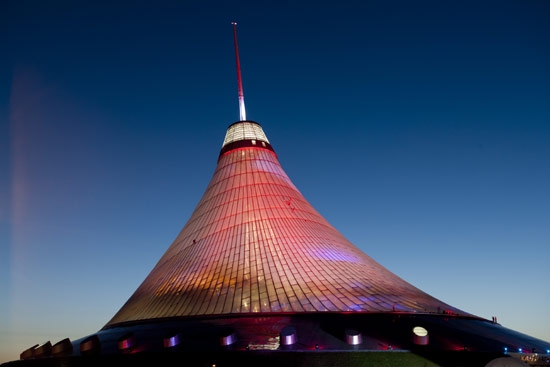
In the capital city of Astana, Kazakhstan, rises the largest “tent” in the world – Khan Shatyr Centre. The cable-net, tensile structure soars 150 meters to form the highest peak on the Astana skyline, providing dramatic views over the city and the Steppes beyond. The building encloses an area of more than 100,000 square meters with retail spaces, parks, a beach, restaurants and entertainment facilities. Designed by Foster + Partners of the UK, this urban oasis is designed to withstand the wild temperature extremes of Kazakhstan – from a sweltering 40+ degrees C in summer down to a bone-chilling minus-40 degrees C in winter. Supported by a giant tripod, the tent is covered with a transparent polymer material called ETFE that allows daylight to enter the interiors while sheltering them from weather extremes. Foster, along with engineers at Buro Happold, created a system that harnesses solar gain in winter and releases warm air to the apex in summer. The structure is so large that small weather systems can develop inside because of the extreme conditions outside – this was the big challenge for the designers.
Sunday, December 5, 2010
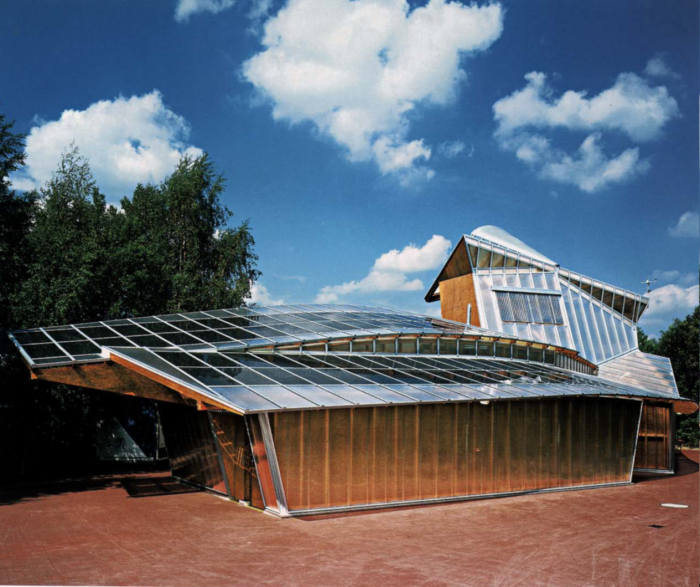
Recreation Center in Germany Powers with Solar
Tuesday, October 12, 2010
BedZED Community Success and Lessons Learned

Friday, October 1, 2010
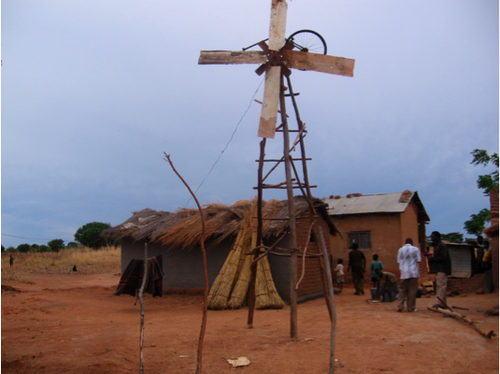
Malawi Boy Harnessed Electric Wind in Africa
Sunday, September 19, 2010
The New Old Faithful Center Rocks in Yellowstone
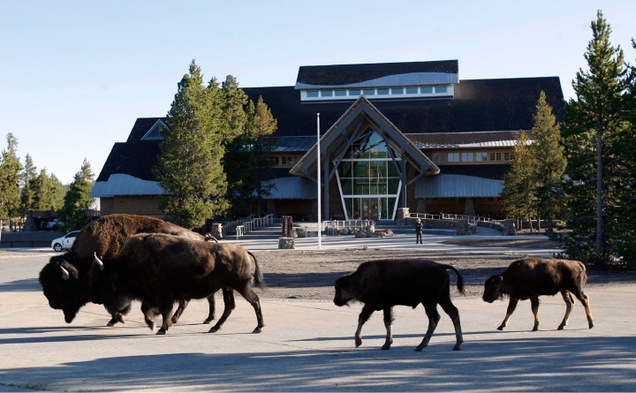
Yellowstone National Park has 5,000 employees, 2,000 hotel rooms and 2,000 campsites. In 2009 it had 3.3 million visitors with more expected in 2010. Until a few years ago, the thousands of tons of trash generated by all those people were being hauled to a landfill 100 miles away. But, now an aggressive effort to divert, reuse and eliminate the waste has Yellowstone composting and recycling so much that it is diverting 80 percent of its waste (including some 1,200 tons of electronics!) from the landfill. The most prolific item in the waste bins is the plastic water bottle. In 2009, 40 tons of plastic water bottles were recycled and Yellowstone will most likely hit a 90 percent diversion rate by 2011. Even the 10,000 gallons of used cooking oil generated by Park concessioners is recycled and used to create biodiesel that powers everything from hundreds of unmodified vehicles to boilers in the park. And the ubiquitous camp stove propane tanks are now purged of propane that is used to power a generator and a compressor that punctures and flattens the cylinder, which is then recycled as raw steel. So it's only fitting amongst all these wonderful "green" efforts that Yellowstone has constructed a green visitor and education center where the old one stood.
Subscribe to:
Posts (Atom)
